Outdoor Patio Refresh Ideas for Renters (No Drilling)
Outdoor patio refresh ideas for renters: no-drill rugs, seating, and greenery. Preview yours at RoomRefresh.ai before you buy.
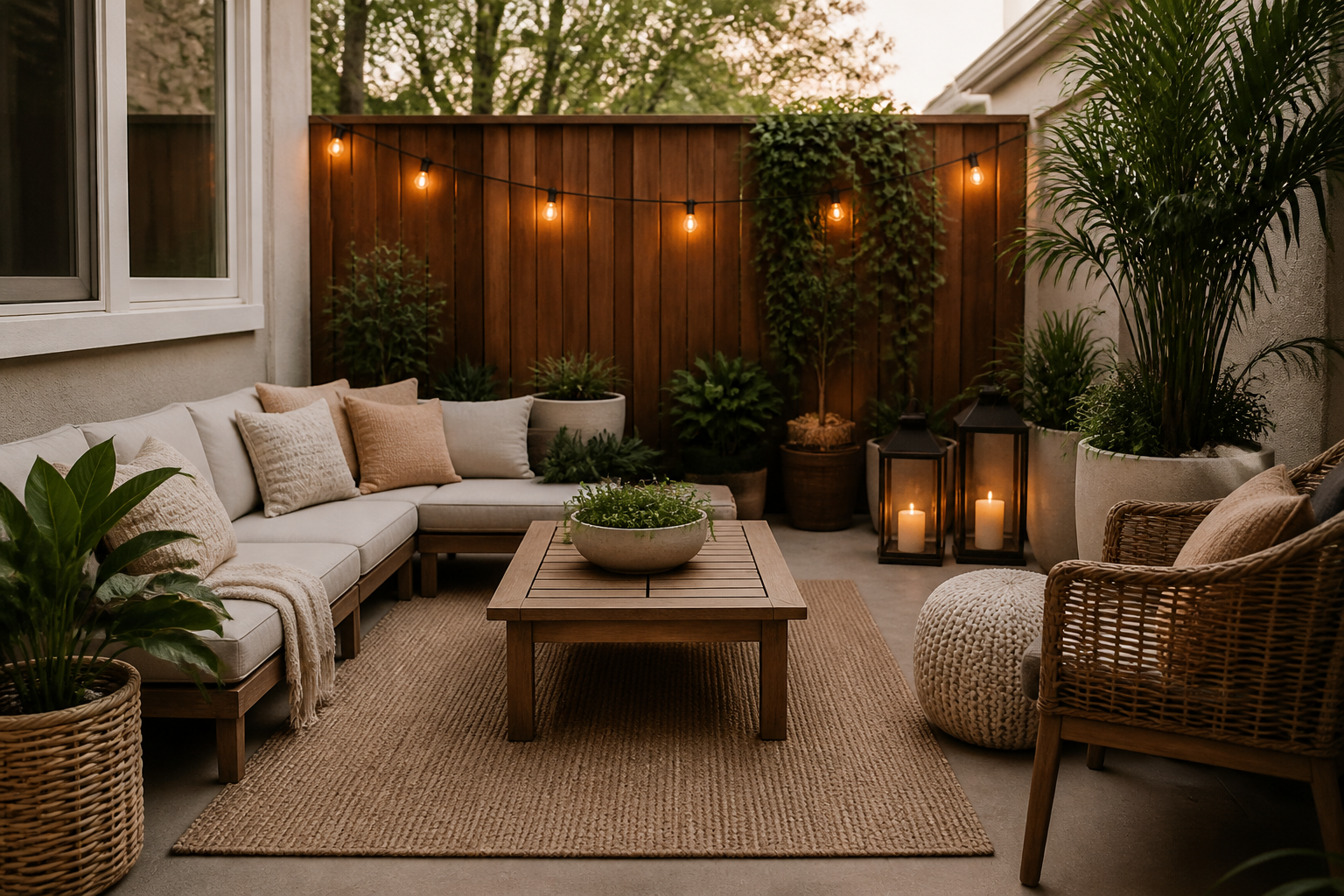
Outdoor Patio Refresh Ideas for Renters: No Drilling Required
Your outdoor patio refresh has one hard constraint before it has a single design idea: nothing gets attached to the building. No screws in the railing, no anchors in the concrete, no paint on walls that aren't yours. That rule doesn't shrink your options as much as it reshapes them. Every piece on this list stands on its own weight, packs away for winter, and leaves the slab exactly as it was found.
The Problem With a Bare Concrete Slab
Most rental patios and balconies share the same starting point: a gray concrete rectangle, somewhere between 5x8 and 8x12 feet, with a drainage grate in one corner and a sliding door that eats a third of the usable floor when it's open. There's usually a shared wall or railing you can't touch and a lease clause somewhere that says "no permanent alterations." The result is a space that gets used for storing the bikes and the recycling bin, not for sitting.
The fix isn't more furniture. It's the right three decisions, made in order: what goes on the ground, what you sit on, and what grows. Skip any one of them and the space still feels like a slab with objects on it instead of a room.
Decision 1: Lay Down a Ground Layer That Won't Mildew
Concrete reads cold and industrial until you cover it, but the wrong rug turns into a mildew problem within a season. Skip anything labeled "indoor-outdoor" without checking the fiber first. Solution-dyed polypropylene sheds water and won't fade under UV; a jute-look synthetic weave gives the same visual softness as real jute, with none of the rot that comes from actual jute sitting on damp concrete.
| Ground Option | Approx. Price (6x9 ft) | Handles Drainage/Rain | Best For |
|---|---|---|---|
| Solution-dyed polypropylene rug | $60-$140 | Good, hoses off | Covered balconies |
| Jute-look synthetic weave | $90-$180 | Good | Layering under a lounge chair |
| Interlocking composite deck tiles | $180-$400 for full coverage | Excellent, gaps let water through | Uncovered patios with real weather exposure |
Leave a 10 to 12 inch gap between the rug's edge and the drainage grate so water still finds it, and size down rather than up. A 5x7 rug on a 6x9 slab leaves a visible concrete border, which reads as intentional; a rug that fills the space edge to edge looks like it's fighting the room instead of framing it.
Decision 2: Anchor With Seating That Folds or Stacks
Wind matters here in a way it never does indoors. A single lightweight bistro chair under 15 pounds will tip in a gust off the tenth floor, so look for powder-coated steel frames closer to 20-25 pounds each, or a two-seat loveseat that's heavy enough to stay put but still light enough to lift and sweep under. Folding bistro sets run $120-$250 for a table and two chairs and store flat against a wall in winter. A stacked papasan or a sling chair with a removable cushion works well for a single-seat balcony under 40 square feet.
If you're deciding between a full sectional and two chairs plus a side table, take the two chairs. A sectional locks the room into one layout; two movable chairs can turn to face the sunset in July and tuck against the rail in a downpour.
Decision 3: Layer Greenery in Movable Pots
Plants do the work that paint would do indoors: they add color, soften hard edges, and make the space feel tended instead of temporary. The trick is layering height without attaching anything to the rail. An olive tree in a 16-inch pot anchors one corner at eye level; trailing rosemary in a rail-height planter that simply rests on the ledge, never clamped, softens the horizontal line of the railing; a low grass planter at floor level fills the gap between furniture and floor. All three move when you do.
Skip ferns and other moisture-lovers unless the patio is shaded most of the day. Unglazed terracotta on a south-facing slab dries out twice as fast as the same pot would indoors, so a fern in full sun by 2pm is often a dead fern by August.
Materials That Hold Up Outdoors Without Looking Temporary
Not every material labeled "outdoor" actually survives outdoors, and the ones that do vary widely in how they age. Solution-dyed acrylic fabric, the Sunbrella family and its equivalents, resists fading for years and wipes clean with a hose. Plain polyester cushion covers fade within one summer and hold water instead of shedding it. For frames, powder-coated aluminum won't rust and stays light enough to move solo; untreated iron looks handsome for one season, then rusts at the welds by the second. Teak and eucalyptus both silver over time without rotting, which some renters love and others find dull. If you want the wood tone to stay warm, an occasional teak oil application slows the gray, though most people let it go and enjoy the low-maintenance version instead.
One material worth naming specifically: resin wicker holds up better than natural rattan in direct sun and rain, but the cheap versions turn brittle and crack within a year. Check the weave gauge before buying. A tighter, thicker weave costs more upfront and outlasts a loose, wide weave by several seasons.
Styling It Like a Room, Not a Storage Afterthought
The pieces above only add up to a room if they're placed with the same logic you'd use indoors: a ground layer, a seating anchor, a layer of height and texture. A coastal palette of bleached wood tones, rope, and sandy neutrals works especially well on a patio because it already assumes weathered materials and outdoor light. If your building leans that direction, pair this refresh with our coastal living room refresh guide for how the same palette reads indoors, so the patio and the room behind the sliding door feel like one continuous space instead of two unrelated zones.
For renters stretching a tight budget across both an indoor room and a patio, our guide to refreshing a bedroom on a budget covers the same low-waste, no-drill logic applied to a different room.
Preview Your Patio Before You Buy Anything
The hardest part of an outdoor patio refresh built from removable pieces is guessing how a rug, a chair pair, and a planter will actually look together on your specific slab, with your specific railing and your specific light. RoomRefresh.ai removes the guessing: upload one photo of your actual patio, pick a style such as coastal, biophilic, or minimalist, and get four photorealistic redesigns of your own space plus a shopping list of matching pieces. Because the redesigns work from your real photo, they respect your actual slab dimensions, your actual railing, and your actual drainage grate instead of a generic patio template.
The free tier gives you a limited number of renders to test the idea on your own balcony before spending anything. If you want to move forward, the paid plan adds unlimited renders, higher resolution, and the full shopping list export so you can actually shop the look. Read more about what the free version includes in our breakdown of the free AI design tools worth trying.
Upload a photo of your patio to RoomRefresh.ai and see four redesigns before you buy a single chair.
Bringing It Together
A rental patio doesn't need a landlord's permission to become a place you actually sit. Get the ground layer right, choose seating that can lift and turn, and let two or three pots do the work paint would do indoors. None of it requires a drill, a deposit risk, or a call to a contractor. What it requires is seeing the combination before you commit to it, which is the one step most patio refreshes skip.