AI Outdoor Patio Design: Coastal vs. Biophilic Preview
Preview coastal rattan or biophilic jute on your own patio photo with ai outdoor patio design at RoomRefresh.ai. Upload and compare free.
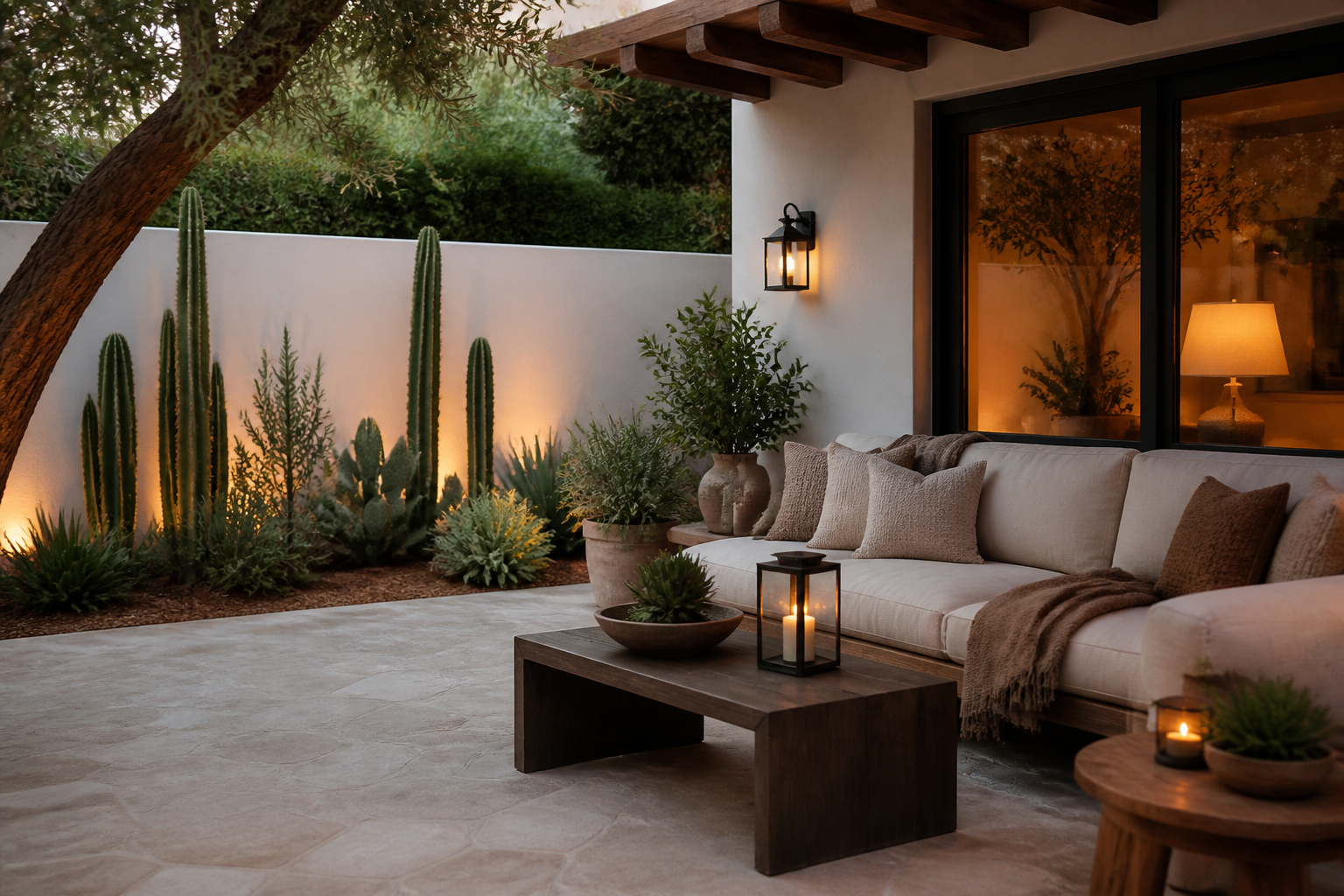
AI Outdoor Patio Design: See Coastal vs. Biophilic on Your Own Patio Before You Buy
A bare concrete slab or a builder-grade wood deck gives you almost no information about what it wants to become. You know you don't want the sagging patio set you inherited, but rattan lounge chairs and a jute rug point toward two very different rooms outside your door, and outdoor furniture doesn't come with a forgiving return policy once a season of sun and rain has worked on it. This is where ai outdoor patio design tools earn their keep: upload one photo of your actual patio, preview both directions side by side, and only then decide what to buy.
Two Credible Directions for the Same Slab
Coastal and biophilic solve the same bare-patio problem with different materials, and both hold up outdoors when you pick the right versions of each. Coastal leans on weathered rattan or resin-wicker lounge chairs, a driftwood-toned side table, blue-and-white striped cushions in solution-dyed acrylic (not printed cotton, which fades in one summer), a flatweave outdoor rug in a rope or shell pattern, and whitewashed ceramic planters with beach grass or a potted agave.
Biophilic keeps the same bones but shifts the palette: an FSC-certified teak bench instead of white rattan, a low-pile jute-look polypropylene rug in undyed oatmeal tones, terracotta or ribbed concrete planters, and greenery layered at three heights, a trailing pothos or creeping fig at rug level, an olive tree or dwarf citrus at eye level, and a hanging fern or string-of-pearls above. Both directions work on a 6x8 concrete slab or a 10x12 wood deck; the difference is warmth and texture, not square footage.
The Real Cost of Guessing Wrong on a Patio
Indoor mistakes are annoying. Outdoor mistakes are expensive, because the return window closes the day you unbox something into direct sun. A $90 to $220 outdoor rug that turns out to be jute-look but not actually UV-rated will mildew or bleach within six to eight weeks on a south-facing slab. Teak furniture left unoiled for a full season grays unevenly instead of aging into the even silver patina people actually want. And on a rental balcony, planters add up fast: a filled 16-inch ceramic pot can weigh 35 to 45 pounds, which matters if your building's balcony load limit is closer to 30 pounds per square foot than you'd guess.
Materials That Actually Survive Outside
Regardless of which direction you pick, a few material swaps decide whether the patio still looks good next July. Choose Sunbrella or another solution-dyed acrylic over polyester or printed cotton for cushions; it costs 20 to 30 percent more per yard but resists fading for years instead of one season. Choose an HDPE flatweave rug over a natural jute rug outdoors; jute wicks moisture and molds against concrete within weeks, while HDPE mimics the look and hoses off. And raise any rug or furniture leg a quarter inch off the slab with felt pads or a thin rug pad so water drains instead of pooling under it, which is the single most common cause of the moldy-rug smell nobody warns you about.
Preview Both Directions Before You Spend a Cent
This is the part that actually changes the outcome: you don't have to imagine whether rattan or teak looks right against your specific railing, your specific light, and your specific slab color. Upload a photo of your patio to RoomRefresh.ai, pick Coastal or Biophilic, and you get 4 photorealistic redesigns built from your patio's real geometry, plus a shopping list of the actual rattan, teak, jute, and planter pieces used in each. If your patio faces west and bakes in afternoon sun, you'll see how the pale coastal palette or the deeper biophilic greens actually read in that light before you commit $600 to a lounge set. See how this plays out for a full room in our coastal living room rental refresh, or browse the plant-forward version in our biophilic dining room ideas if you want the indoor companion to this same palette.
Coastal vs. Biophilic: A Decision Framework
| Factor | Coastal (rattan + driftwood) | Biophilic (jute + greenery) |
|---|---|---|
| Best light condition | Bright, direct sun; pale tones don't wash out | Partial shade; deep greens read richer with less glare |
| Typical starter budget | $450–$800 for seating, rug, two planters | $400–$750, but plants add ongoing cost ($15–$60/plant) |
| Maintenance load | Cushion covers need seasonal washing or storage | Watering schedule; some plants need winter indoor move |
| Small-balcony fit | Resin wicker chairs fold and stack easily | Vertical planters save floor space better than wide pots |
| Rental-friendly | Fully removable, no drilling required | Fully removable; heavier pots need weight-limit check |
If your patio gets harsh afternoon sun and you're renting, coastal's washable, foldable pieces are the lower-risk bet. If you've got some shade and want the patio to feel like an extension of an indoor plant collection, biophilic's layered greenery does more work per square foot. If you're genuinely torn, that's exactly the situation the four-redesign preview is built for: you're not choosing blind, you're comparing two finished pictures of your own patio.
Before You Buy Anything
A patio refresh is decor, not construction: new furniture, textiles, planters, and lighting, never new decking or structural changes. Once you've settled on a direction, don't buy the whole list at once. Start with the one anchor piece (the lounge chair or the bench) and the rug, live with it for two weeks, then add planters and cushions once you've confirmed the color reads right at different times of day. Upload your patio photo, pick your style, and get the shopping list before the first purchase, not after.
Ready to see it on your own slab? Go to RoomRefresh.ai, upload a photo of your patio, choose Coastal or Biophilic, and get 4 photorealistic redesigns of your actual space plus a matching shopping list, so the only guessing left is which cushion color you like better.
Frequently Asked Questions
Can I preview patio furniture on my own photo before buying?
Yes. Upload a photo of your actual patio to RoomRefresh.ai, pick a style like Coastal or Biophilic, and you'll get 4 photorealistic redesigns built from your patio's real layout, along with a shopping list of the pieces shown.
Is coastal or biophilic better for a small concrete balcony?
Coastal tends to work better on small, sun-heavy balconies because resin wicker and pale palettes fold, stack, and resist fading. Biophilic suits balconies with partial shade, since deep greens and jute tones look muted rather than washed out in bright direct sun.
Do outdoor rugs need to be waterproof to use on a patio?
They need to be UV-stable and mold-resistant rather than strictly waterproof, since a rug that sits in standing water will mildew regardless of material. HDPE flatweave rugs handle rain and hosing far better than natural jute, which absorbs moisture against concrete.
How heavy can patio planters be on a rental balcony?
Most residential balconies are rated for 30 to 50 pounds per square foot of live load, and a filled 16-inch ceramic planter can weigh 35 to 45 pounds on its own. Check your building's load rating or lease terms before grouping several large planters in one corner.
What's the actual style difference between coastal and biophilic patios?
Coastal uses whitewashed and driftwood tones, rattan or resin wicker, and blue-and-white striped textiles for a beachy, breezy feel. Biophilic keeps a similar natural-material base but shifts to teak, jute-look weaves, terracotta, and dense layered greenery for a calmer, plant-forward feel.